





Gold Coast neighborhood guide
Development
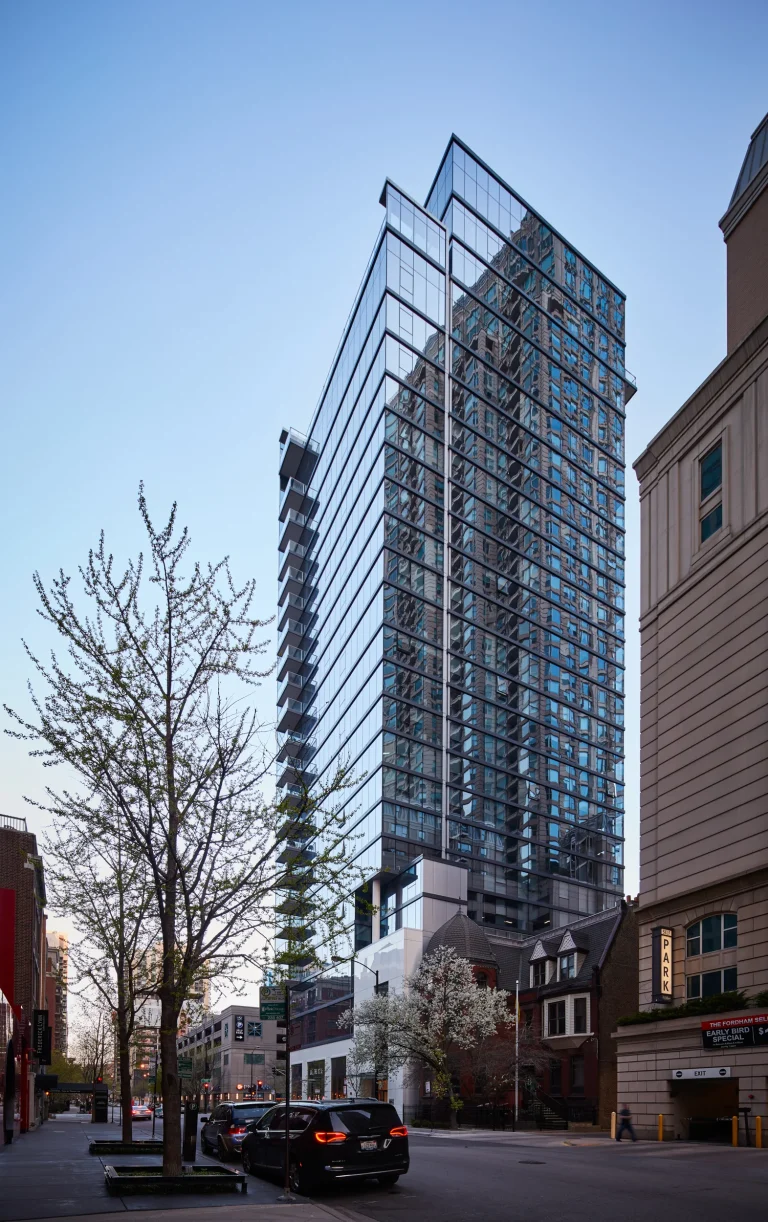
The Gold Coast took shape after Potter Palmer began building a mansion at 1350 N. Lake Shore Drive in 1882; it was completed in 1885 and demolished in 1950. Wealthy families followed, many from Prairie Avenue on the South Side. The Astor Street District, a Chicago Landmark district designated in 1975, covers the 1200 to 1600 blocks of Astor Street, with houses and apartment buildings built between 1880 and 1940. The Charnley House at 1365 N. Astor Street was designed by Adler and Sullivan and built in 1891 and 1892. The Gold Coast Historic District was added to the National Register of Historic Places in 1978. Housing in the Gold Coast includes 19th-century houses, townhouses, early 20th-century apartment buildings and high-rises, with the high-rises around the Astor Street District mostly built between 1960 and 1980.
Parks & Recreation
Oak Street Beach, at 1000 N. Lake Shore Drive, is the Gold Coast’s lakefront beach and part of Lincoln Park, which continues north along the shore; it has designated swim areas, a beach walk and volleyball. Washington Square Park, at 901 N. Clark Street, was donated to the city as public land in 1842.
Transit
The Gold Coast is served by the Clark/Division station on the CTA Red Line at 1200 N. Clark Street, which connects to bus routes 22 Clark, 36 Broadway, 70 Division and 156 LaSalle. The Chicago station on the Red Line, at 800 N. State Street, is near the Gold Coast’s southern end. Bus routes 146 Inner Lake Shore/Michigan Express and 151 Sheridan run along Michigan Avenue, and route 72 North runs along North Avenue.
Community Area
The Gold Coast is part of the Near North Side, official Chicago community area 8.